

An Order Management System (OMS) is a system that unifies the operations of all sales channels into a single point of control. It is neither an e-commerce platform nor an ERP. It is the layer that connects the product catalog, inventory, orders, and logistics, regardless of where the sale originated.
The problem that OMS solves
Without a unified inventory management system (OMS), each channel maintains its own inventory. When a product is sold on one channel, the others aren’t updated. The result is overselling: a product that’s no longer in stock continues to be sold, the order is canceled, and the company’s reputation suffers. But the problem isn’t just inventory—it’s visibility. Without a unified system, reports are compiled by cross-referencing platforms with different metrics that don’t always align. Decisions are made based on incomplete information.
An OMS eliminates that friction: unified, real-time inventory, orders that enter the same processing workflow regardless of the channel, and operations that scale without increasing complexity.
How e3OMS Works
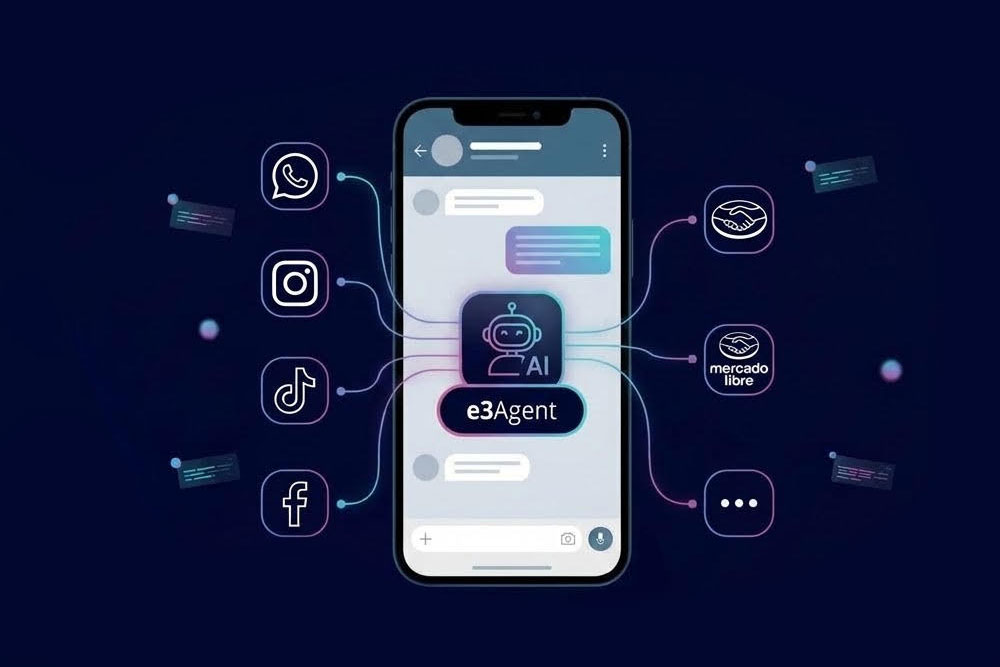
e3OMS connects owned channels, marketplaces, seller portals, and brick-and-mortar stores within a single operational architecture. It manages inventory in real time, automatically routes orders, maintains a centralized catalog with changes replicated across all channels, provides full traceability for each order, and offers consolidated reporting in a single dashboard.
The Samsung Case
Samsung did not operate its own e-commerce platform in Argentina. e.tres built the entire operation and manages it 100%: 11 simultaneous channels—e-Shop, mobile app, seller portal, and marketplaces—with multiple sellers per product line, all under a single e3OMS architecture.
When is surgery necessary?
When inventory isn't automatically synchronized across channels, orders require manual intervention, reports are compiled by cross-referencing platforms, or the operations team is growing at the same rate as sales. If any of these conditions apply, the time has come.
Does your business have more channels than you can manage manually? At e.tres, we implement e3OMS for brands of all sizes. Let's talk.