

For many years, the challenge for companies was to enter the digital marketplace: develop an e-commerce platform, integrate it with existing systems, add payment methods and logistics, and start selling.
That situation changed completely.
Today, the challenge is no longer simply being online. It is being able to manage an increasingly complex ecosystem where e-commerce, brick-and-mortar stores, marketplaces, kiosks, payment methods, logistics providers, ERPs, marketing, and multiple technology providers all coexist.
And that’s where one of the main problems arises: there’s a lot of technology, a lot of data, and many stakeholders, but there isn’t always a unified vision for the business. Each department focuses on its own platform and metrics. The result is fragmentation, slower decision-making, and, all too often, debates about the data before we can even discuss what to do with it.
That’s why I believe the next step in the evolution of e-commerce doesn’t involve adding more software. It involves better connecting, orchestrating, and managing what already exists.
From Platform to Ecosystem
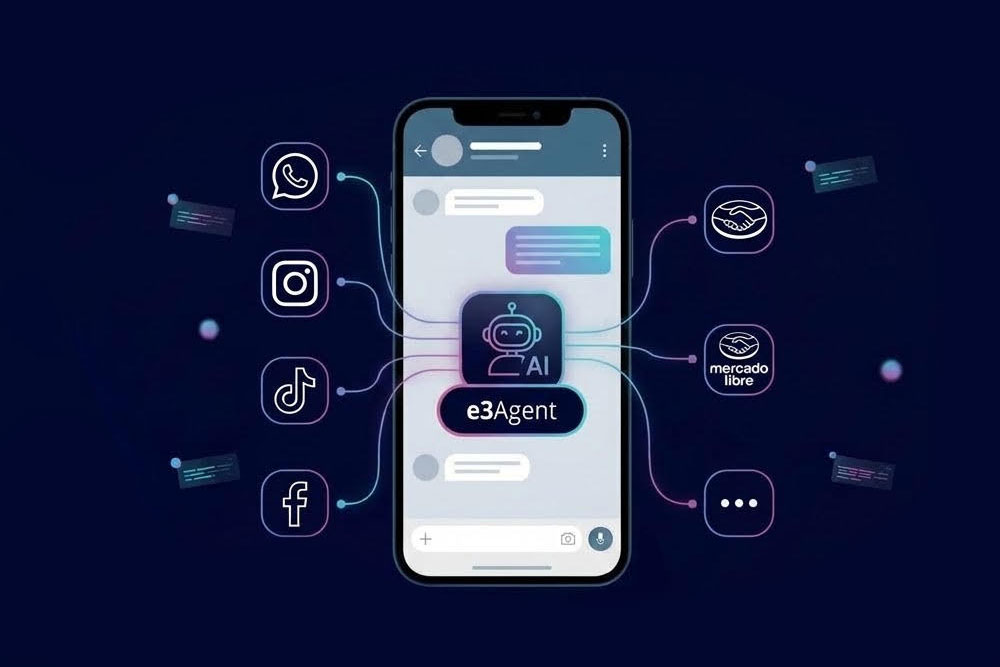
At e.tres, we’ve also evolved in response to this reality. We started out developing e-commerce technology, and as our customers’ needs grew, we incorporated solutions for different parts of the business. This is how our ecosystem took shape: e3Stores as a digital commerce platform; e3OMS for orchestrating orders, inventory, and omnichannel operations; e3Kiosk to bring the digital experience to the physical point of sale; e3Eco to measure the operation’s carbon footprint; and e3Agent, the AI-powered conversational layer for managing leads and sales across all messaging channels.
But we realized that something else was missing: not another operational platform, but a vision that would allow us to integrate information, objectives, processes, and key personnel to manage the business as a whole. That’s where e360 comes in.
A Single Source of Truth
e360 is based on a fundamental concept: a company should be able to view its digital operations from a single location—not by replacing the tools it already uses, but by connecting them. This is because a client’s ecosystem may include various platforms, ERPs, payment methods, marketplaces, and specialized suppliers. Our vision is to integrate that ecosystem and transform it into actionable insights: a single source of truth for understanding what’s happening, detecting deviations, and measuring results. And on top of that information, we add a layer of AI capable not only of showing what happened, but also of helping to interpret, anticipate, and take action.
The next step isn't to add more tools
Over the next few years, companies will have access to more and more technology and artificial intelligence. The key differentiator will not be who has the most tools, but who can make them work together, turn data into decisions, and manage the ecosystem with a shared vision.
That is the path we are forging at e.tres: moving from software to an ecosystem, and from the ecosystem to a unified, sustainable, and intelligent operation.